
Fitness Equipment for Beginners: What You Actually Need
 BodyPact Team
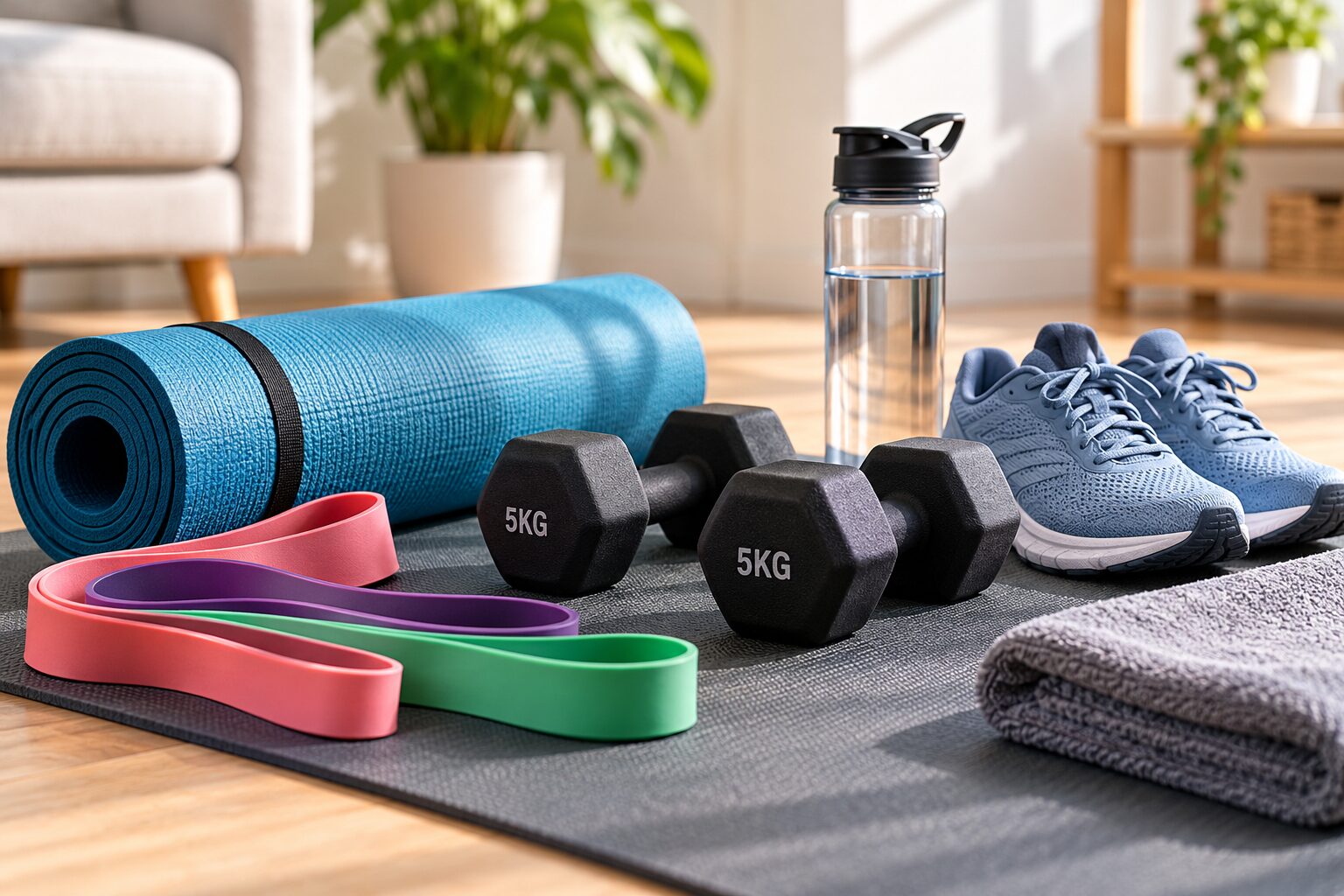
You don’t need an expensive home gym to start exercising. In fact, the most useful fitness equipment for beginners is often surprisingly simple: comfortable shoes, an exercise mat, and perhaps a resistance band or a pair of dumbbells.
However, the right equipment depends on your goals. Someone who wants to walk more needs a different setup from someone planning strength workouts in a small apartment. Before spending money, it’s worth understanding which items will genuinely improve your workouts and which can wait.
This guide explains what to buy first, how to choose equipment for your space, and how to start exercising without unnecessary purchases.
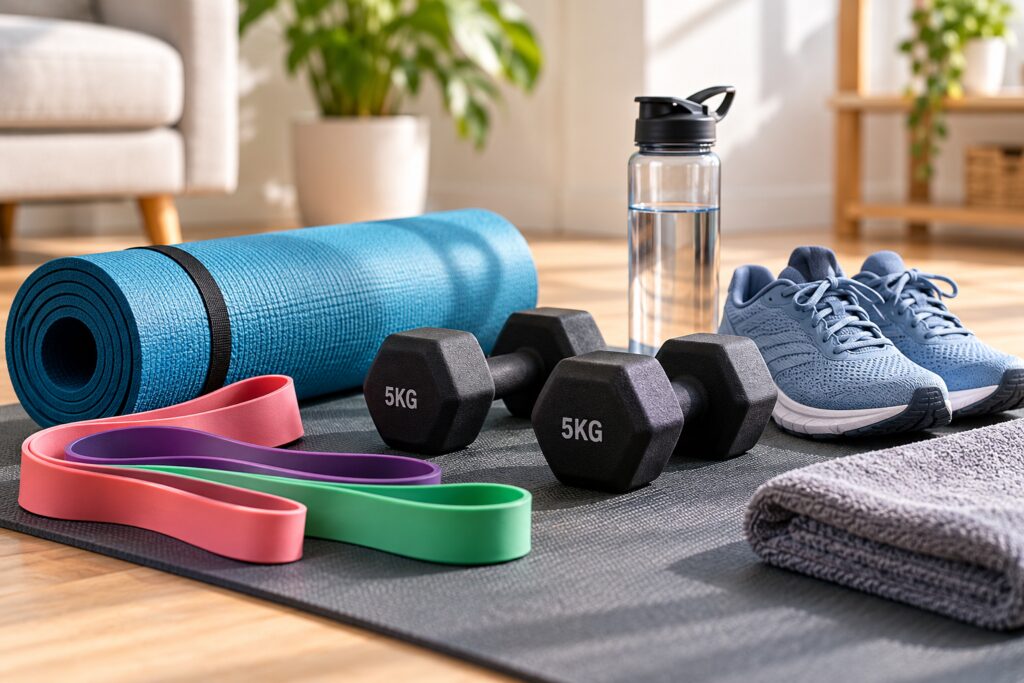
Fitness Equipment for Beginners: Start With Your Goals
Before buying anything, think about what your first month of exercise will look like.
If walking is your main activity, comfortable shoes may be all you need. On the other hand, home strength workouts can benefit from resistance bands or dumbbells once you’re familiar with basic movements.
| Your goal | What you need to start | Optional later |
|---|---|---|
| Walk more | Comfortable walking shoes | Reflective gear, fitness tracker |
| Build strength at home | Floor space and a sturdy chair | Resistance bands, dumbbells |
| Improve mobility | Comfortable clothing and floor space | Exercise mat, yoga blocks |
| Do short cardio workouts | Supportive shoes and clear floor space | Step platform, jump rope |
| Start gym workouts | Comfortable shoes and clothing | Personal accessories if needed |
If you’re still deciding how to begin, our fitness for beginners guide explains how to build a manageable routine before investing in equipment.
Best Fitness Equipment for Beginners: 5 Essentials
Not every item belongs in your first shopping basket. Instead, consider how each piece of equipment supports the activities you want to do regularly.
1. Exercise Mat
Best for: Floor exercises, stretching, and mobility.
An exercise mat provides a more comfortable surface for movements such as glute bridges, dead bugs, and floor stretches. It also creates a dedicated workout area, even when you’re exercising beside your bed.
For most people, a mat that stays firmly in place is more useful than one with an elaborate design. If your knees are sensitive, additional cushioning may help. However, very soft mats can make standing balance exercises less stable.
You can skip this purchase if your routine consists entirely of walking or standing exercises.
2. Resistance Bands
Best for: Portable strength training and exercises with adjustable resistance.
Resistance bands are especially practical when storage space is limited. Because they’re lightweight, you can keep them in a drawer or take them when traveling.
Different designs support different movements:
- Loop bands: Often used for lateral steps and hip exercises.
- Long resistance bands: Useful for rows, presses, and other strength movements.
- Tube bands with handles: Convenient for selected upper-body exercises.
Start with resistance that allows smooth, controlled movements. As you become stronger, you can gradually increase the challenge.
For exercise ideas, the American Council on Exercise exercise library includes demonstrations of different strength movements.
Before each workout, inspect bands for damage. Also, avoid attaching them to unstable furniture or doors that might open unexpectedly.
3. Adjustable or Fixed Dumbbells
Best for: Building strength with a small selection of exercises.
Dumbbells are versatile because the same pair can support rows, presses, carries, and lower-body movements.
Fixed dumbbells are simple to use and don’t require adjustments. Adjustable models, meanwhile, offer multiple weight options while taking up less storage space. Their main disadvantage is usually the higher initial cost.
When choosing a weight, focus on control rather than lifting as much as possible. Ideally, you should be able to complete the planned repetitions with good technique while finding the final repetitions moderately challenging.
If you’re still learning bodyweight movements, there’s no need to rush this purchase.
4. Comfortable Walking or Training Shoes
Best for: Walking, standing cardio, and many gym workouts.
A suitable pair of shoes can make regular activity more comfortable. However, expensive branding doesn’t automatically mean a better fit.
Walking shoes may work well for walking-focused routines. Training shoes can be more appropriate for workouts involving frequent changes of direction.
When trying shoes, wear the socks you normally exercise in. Walk around and check whether your heel slips, your toes feel cramped, or any area rubs uncomfortably.
Most importantly, choose footwear that suits the activity rather than buying a pair simply because it’s advertised for fitness.
5. A Sturdy Chair or Step
Best for: Supported movements, sit-to-stands, and basic balance exercises.
A stable chair is one of the most overlooked pieces of beginner workout equipment. For example, chair sit-to-stands help you practice a movement you already use in everyday life.
In addition, a chair can provide support during selected balance exercises. Make sure it doesn’t slide, roll, or tip when you use it.
Avoid lightweight folding chairs and rolling office chairs. Similarly, if you want to perform step exercises, choose a stable platform designed for that purpose instead of stacking household objects.
How Much Should You Spend on Fitness Equipment for Beginners?
You can start with almost no additional spending. Rather than buying a complete kit, begin with the equipment you already own and identify what’s missing.
| Setup | What it includes | Best for |
|---|---|---|
| No-purchase setup | Floor space, sturdy chair, suitable shoes | Trying exercise before spending |
| Minimal home setup | Exercise mat and resistance band | Mobility and light strength workouts |
| Basic strength setup | Mat, dumbbells or bands | Regular full-body strength sessions |
| Expandable setup | Adjustable weights and accessories | People exercising consistently |
For example, if you repeatedly skip floor exercises because your floor is uncomfortable, buying a mat makes sense.
By contrast, if you enjoy walking and rarely do indoor workouts, purchasing dumbbells may offer little immediate value.
Ultimately, the best fitness equipment for beginners is equipment that supports activities you’ll actually repeat.
Home Fitness Equipment for Beginners: Small Spaces
A small apartment doesn’t have to prevent you from exercising. Many basic workouts require only enough space to stand, extend your arms, and lie down comfortably.
A practical home fitness equipment for beginners setup could include:
- A roll-up exercise mat.
- One long resistance band.
- A sturdy chair.
- A small basket for storing accessories.
Keep the surrounding area clear of cables, slippery rugs, and furniture corners. Before starting, check whether you can move your arms and legs freely.
If you live above someone else, quieter activities may be more convenient. For instance, marching in place, controlled squats, sit-to-stands, and low-impact strength exercises usually create less noise than jumping workouts.
What Equipment Do You Need for Your First Month?
Instead of purchasing everything immediately, use your first four weeks to discover what works for you.
Week 1: Start With What You Have
Begin with two short strength sessions and a few comfortable walks.
Here’s an example of a simple home workout:
- Chair sit-to-stands — 8 repetitions.
- Wall push-ups — 8 repetitions.
- Standing calf raises — 10 repetitions.
- Glute bridges — 8 repetitions, if comfortable.
- Rest as needed, then repeat once if you feel ready.
This routine requires very little equipment. In fact, suitable clothing, stable furniture, and comfortable floor space may be enough.
Focus on learning the movements rather than completing as many repetitions as possible.
Week 2: Identify What’s Missing
Repeat your routine and pay attention to practical obstacles.
Perhaps the floor feels uncomfortable during glute bridges. In that case, an exercise mat could help.
Alternatively, you might notice that wall push-ups are becoming easier. Rather than buying weights immediately, you could adjust the exercise angle to make the movement more challenging.
If you want additional exercises for your back, a resistance band may be a useful next purchase.
Week 3: Add One Useful Item
By the third week, you’ll have a better understanding of which activities you enjoy.
Choose one piece of equipment that addresses a specific need. Then, learn how to use it properly before adding several new exercises.
For instance, a resistance band can introduce new strength movements without requiring much storage space.
If you prefer dumbbells, start with familiar exercises and manageable weights. Gradual progression is more useful than trying complicated workouts immediately.
Week 4: Review Your Setup
After several weeks, assess whether your equipment supports your routine.
You might discover that walking is your favorite activity and additional home equipment isn’t necessary. Alternatively, short strength sessions may have become part of your weekly schedule.
Both outcomes are useful. The purpose of the first month is to establish a sustainable routine, not collect accessories.
How to Choose Beginner Workout Equipment Safely
Before purchasing beginner workout equipment, consider four practical questions.
Can I control the movement?
If a weight is too heavy or a resistance band is too strong to move smoothly, choose an easier option. Good technique should come before heavier resistance.
Does it fit my space?
Measure the area you’ll use during exercise, not just the equipment’s storage dimensions. For example, resistance band exercises may require more room than the band itself suggests.
Is it easy to inspect and maintain?
Check handles, adjustment mechanisms, and resistance bands regularly. Follow the manufacturer’s instructions and replace damaged equipment.
Will I actually use it?
A product may look impressive in a fitness video without being appropriate for your current routine. Therefore, connect every purchase to an exercise you already plan to perform.
The American College of Sports Medicine provides guidance on resistance training and exercise programming. Different forms of resistance can support strength development, so beginners don’t need a particular machine to start.
Fitness Equipment for Beginners: What Not to Buy Yet
Some products can become useful later. However, purchasing them before you’ve established a routine may create unnecessary expense.
Large Cardio Machines
Treadmills, exercise bikes, and rowing machines can make indoor cardio convenient. Nevertheless, they require storage space and often represent a substantial investment.
Before purchasing one, consider whether walking outdoors, visiting a gym, or following short home workouts already meets your needs.
Heavy Weight Sets
A collection of dumbbells may look like a complete home gym. Yet beginners often need only a small amount of resistance while learning basic exercises.
Start with manageable equipment and expand your collection as your strength and training needs develop.
Complicated All-in-One Equipment
Machines with multiple attachments can offer exercise variety. Unfortunately, they may also be difficult to assemble, store, or adjust.
If you’re unfamiliar with the exercises a machine supports, learn the basic movements before committing to a large purchase.
Products Promising Fast Results
Be cautious about equipment marketed as a shortcut to dramatic fat loss or muscle growth.
Exercise results depend on consistent training, appropriate progression, recovery, and other lifestyle factors. Consequently, no single device can replace the foundations of a balanced fitness routine.
Do You Need Fitness Equipment to Get Results?
No. Walking, bodyweight exercises, and other accessible activities can improve physical fitness without a home gym.
According to the Physical Activity Guidelines for Americans, adults should work toward 150–300 minutes of moderate-intensity aerobic activity per week, alongside muscle-strengthening activities on at least two days.
However, these recommendations are goals to build toward, not requirements for your first week. If you’re currently inactive, begin with manageable amounts and gradually increase your activity.
The Move Your Way activity planner can also help you organize different activities throughout the week.
Frequently Asked Questions
What is the first piece of fitness equipment I should buy?
Your first purchase should match your preferred activity. For home floor exercises, an exercise mat may be helpful. Meanwhile, walking-focused routines benefit more from suitable shoes. Resistance bands or dumbbells can be added when you’re ready for additional strength exercises.
Are resistance bands or dumbbells better for beginners?
Both can be effective. Resistance bands are portable and easy to store, whereas dumbbells provide straightforward, measurable resistance. The better choice depends on your available space, budget, and preferred exercises.
Can I build muscle without gym equipment?
Yes. Bodyweight exercises can help beginners develop strength, especially when movements become progressively more challenging. Over time, external resistance may make further progression easier.
How much space do I need for home workouts?
Many standing and floor exercises require only a small clear area. However, you should have enough room to extend your arms and legs without hitting furniture or other objects.
Should I buy a complete home gym kit?
Usually not at the beginning. Instead, establish a routine with minimal equipment, identify what would make your workouts easier, and add items gradually.
Build Your Routine Before You Build Your Home Gym
A mat, resistance band, or pair of dumbbells can make exercise more convenient. Still, none of these items is essential for everyone.
Start with one or two activities you can repeat consistently. After a few weeks, you’ll understand which equipment supports your goals and which purchases can wait.
A useful home workout setup doesn’t need to be expensive. It simply needs to make regular exercise easier.

BodyPact Team
BodyPact author writing about simple food and movement habits without pressure.
Not sure where to start?
Answer 3 questions and get your first simple step for food and movement.