
Fitness for Beginners App: How to Choose the Right One
 BodyPact Team
Starting a fitness routine can feel confusing when you are not sure what exercises to do, how often to work out, or how to track your progress. Data from the 2025 Fitness Industry Benchmarking Report by the Health & Fitness Association shows that fitness facilities maintain a 66.7% member retention rate. Building a lasting habit becomes much easier with the right structure. A fitness for beginners app simplifies those first steps by offering structured workouts, guidance, progress tracking, and a manageable daily routine.
The right app keeps exercise straightforward. It helps you understand each movement, start at a comfortable level, and build a workout habit that fits your lifestyle.
Looking for a simple way to start? Bodypact is a beginner-friendly app that guides you through easy workouts!
What Is a Fitness for Beginners App?
Instead of throwing complex gym protocols at you, a good beginner app keeps things simple:
- Step-by-step workout plans: Structured 4 to 8 week programs designed for low fitness levels, so you always know what to do next.
- Clear video tutorials: Short guides that show correct form, helping you feel confident whether you train at home or in a crowded gym.
- Simple habit tracking: Quick streak counters and gentle reminders that keep you accountable without feeling pushy.
- Home or gym options: Workouts tailored to your setup, whether you have zero equipment in your living room or full gym access.
- Basic progress logs: Easy ways to track completed workouts, daily steps, or nutrition goals if weight management is on your radar.
The best apps don’t push you to break records right away. They make showing up every day as easy and manageable as possible.
What Should Beginners Look for in a Fitness App?
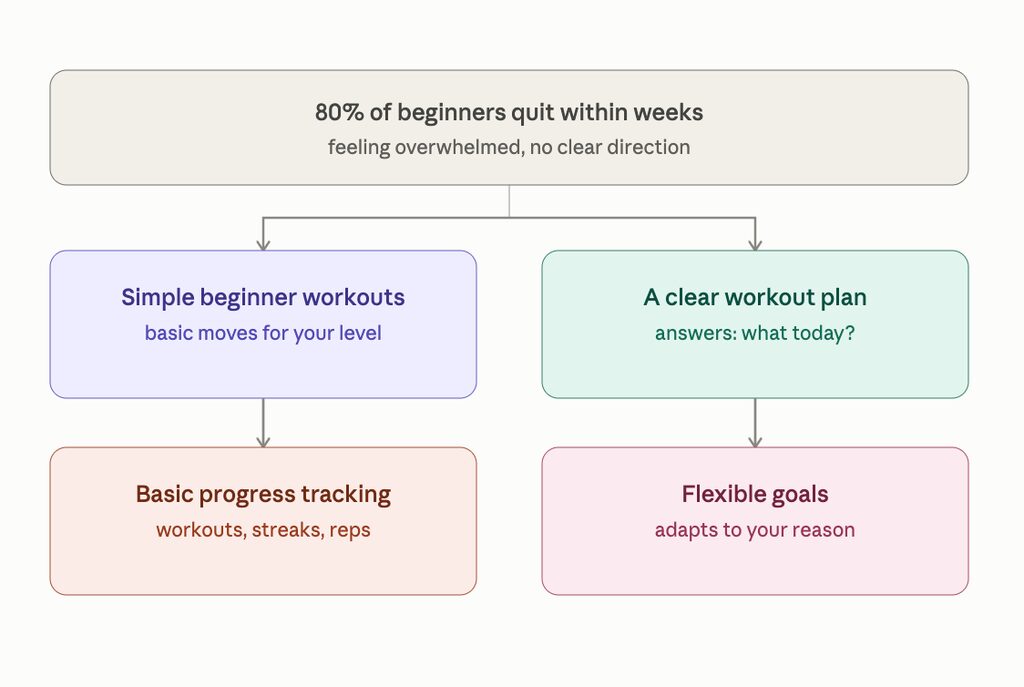
Research shows that over 80% of new app users drop out within the first few weeks, usually because they feel overwhelmed or lack clear direction.
When comparing apps, look for features that actually help you take action:
- Simple beginner workouts: Your first sessions shouldn’t require advanced skills. Look for basic movements and starter levels that match where you are today.
- A clear workout plan: Studies on choice overload show that having too many options makes people freeze up or quit entirely. Opening an app to hundreds of random videos isn’t helpful. A good plan simply answers one question: What should I do today?
- Basic progress tracking: Seeing your momentum build is key to habit formation. Useful metrics include completed workouts, weekly consistency, duration, reps, or daily activity time.
- Flexible goals: Everyone starts for different reasons, whether it’s weight loss, building strength, or simply moving more. The app should adapt to your personal goal instead of pushing a one-size-fits-all program.
How Should a Beginner Start Working Out?
You do not need to start with long or intense workouts.
The CDC guide to getting started with physical activity recommends starting slowly and gradually working toward more activity. It also suggests choosing activities and times that fit your routine.
For example, your first week could include:
- Two short strength workouts
- Two or three walks
- One optional activity you enjoy
- Rest days between more demanding sessions
The exact schedule is less important than choosing an amount of activity you can realistically maintain.
What Types of Exercise Can Beginners Do?
A library of 1,000+ exercises sounds impressive, but for a beginner, it’s usually overwhelming. In fact, research shows that over 80% of new users abandon fitness apps within the first few weeks simply because they don’t know where to start.
When choosing an app, look for features that remove friction and help you show up every day:
- Zero-guesswork plans: Opening an app to endless choices leads to decision fatigue. A clear plan answers the only question that matters: “What am I doing today?”
- Workouts scaled to day one: Advanced protocols cause quick burnout. Beginner routines focus on safe, easy-to-follow movements that build confidence first.
- Progress that keeps you hooked: Habit formation relies on quick wins. Tracking completed workouts, weekly streaks, or active minutes gives you the visual feedback needed to stay consistent.
- Goals that fit your life: Whether you want to lose weight, gain strength, or just move more, your app should adapt to your personal pace, not force a generic template.
That’s exactly why Bodypact cuts through the noise. It delivers structured, adaptable routines designed to turn early efforts into lasting habits.
How Often Should Beginners Exercise?
You don’t need to work out every day to see progress. A 2023 systematic review on resistance training frequency shows that for beginners, training 2 to 3 days a week builds strength and muscle just as effectively as exercising 5 or 6 times a week.
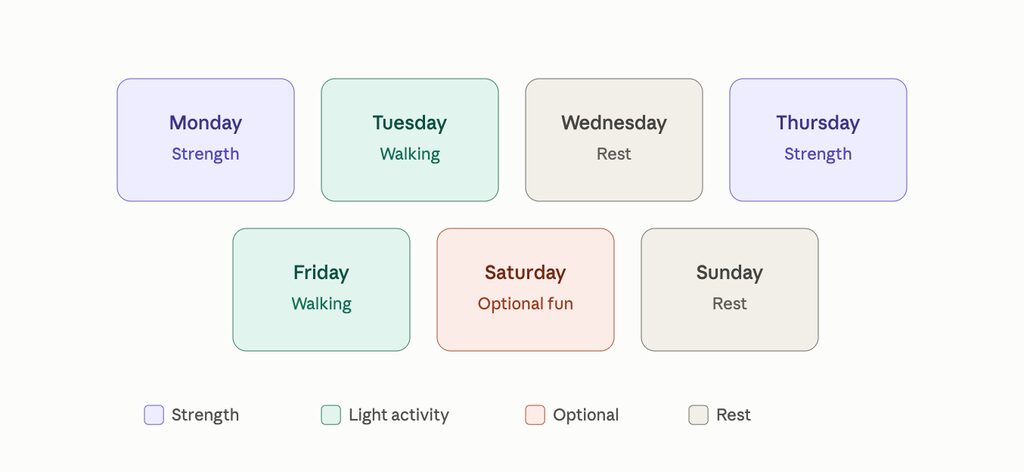
Rest days give your muscles time to rebuild and prevent early burnout, which is why a simple weekly structure works best at the start:
- Monday: Full-body strength workout
- Tuesday: Light walking
- Wednesday: Rest
- Thursday: Full-body strength workout
- Friday: Light walking
- Saturday: Optional fun activity (swimming, cycling, or extra steps)
- Sunday: Rest
Official CDC and WHO guidelines recommend aiming for 150 minutes of moderate activity each week, alongside two strength-focused sessions. But you don’t have to hit those numbers right away.
As your stamina improves, you can gradually step up the intensity or duration. Bodypact makes this easy by auto-adjusting your weekly schedule to match your actual pace, ensuring you stay consistent without feeling overwhelmed.
Should Beginners Track Calories?
Not every beginner needs to count calories. If your main focus is simply getting more active, tracking your workouts and building daily consistency is more than enough to see progress.
However, if your goal includes weight management, tracking what you eat can double your chances of success. Research shows that consistent dietary logging is one of the strongest predictors of long-term weight loss. In fact, a recent 2024 review found that tracking food intake with reasonable accuracy increases the odds of reaching target weight loss goals by 47%.
That said, tracking shouldn’t feel like a second job. Studies on health apps show that daily calorie logging drops significantly after 4 to 8 weeks, from over 5 days a week down to less than 2, due to user fatigue from manual entry.
To make calorie tracking work without burning out, keep these principles in mind:
- Use it as an awareness tool, not a rulebook: Tracking helps you learn portion sizes and energy density, but it shouldn’t dictate your entire relationship with food.
- Focus on high-impact foods first: If logging every meal feels overwhelming, studies show that simplified tracking—focusing only on high-calorie or processed foods—delivers practically identical weight management results as logging every single calorie.
- Keep everything in one place: Having your workouts, daily movement, and basic nutrition logs in a single dashboard reduces app switching and keeps your daily routine simple.
With Bodypact, calorie and nutrition tracking is built right alongside your workout plans. It gives you the option to log meals when you need to, without turning fitness into a math equation.
What Should Beginners Avoid?
Starting fitness does not require an extreme approach.
Doing Too Much Too Soon
It can be tempting to exercise every day when motivation is high.
A more sustainable approach is to start with an amount you can realistically repeat and increase it gradually.
Following Advanced Workouts
A program designed for an experienced athlete may be unnecessarily difficult for someone who is just starting.
Choose workouts that match your current ability.
Changing Everything at Once
You do not need to completely change your exercise routine, diet, sleep schedule, and daily habits on the same day.
Start with one or two manageable changes and build from there.
Focusing Only on Weight
Body weight is only one way to measure progress.
Other useful measurements include:
- How consistently you exercise
- How long you can walk or exercise
- How many workouts you complete
- Changes in strength
- Improvements in endurance
- How comfortable everyday activities feel
How to Choose the Right Fitness for Beginners App
Before choosing an app, think about what you need. Check out the questions that you need to ask below.
Do You Want to Work Out at Home or at a Gym?
If you prefer exercising at home, look for workouts that require little or no equipment.
If you plan to use a gym, an app with equipment-based workouts may be more useful.
Do You Need a Structured Plan?
If you do not know where to start, a structured beginner program can save you from having to choose every workout yourself.
Do You Want to Track Nutrition?
If weight management or nutrition is part of your goal, calorie and food tracking may be useful.
Do You Want to Track Your Progress?
If staying motivated is difficult, progress tracking can give you a visible record of your consistency.
Can You Adjust the Difficulty?
A beginner’s fitness level can change during the first few months.
Look for an app that allows workouts or goals to become more challenging as you improve.
A Simple Beginner Fitness Routine
If you are starting from scratch, keep your first routine simple.
For example:
2 days: Strength training
Choose several basic exercises and perform them at an appropriate level.
2–3 days: Walking or another moderate activity
Start with a manageable duration and gradually increase it.
1 day: Optional activity
Try cycling, swimming, dancing, hiking, a fitness class, or another activity you enjoy.
1–2 days: Recovery
Give yourself time to recover, especially when your body is not used to regular exercise.
The goal is not to create the perfect workout schedule immediately. The goal is to establish a routine you can continue.
How Do You Stay Motivated as a Beginner?
Relying on motivation is the fastest way to quit. Studies on exercise adherence show that initial motivation drops by over 50% within the first 3 weeks of starting a new routine. Motivation gets you out of the door on day one, but discipline and clear systems are what keep you coming back on day thirty.
Instead of waiting to “feel motivated,” focus on building a friction-free routine that runs on autopilot:
| Motivation-Driven (Fails Quickly) | Discipline-Driven (Lasts Long-Term) |
| Waiting for the “right mindset” to workout | Scheduling sessions on your calendar like work meetings |
| Pushing through 90-minute intense sessions | Starting with 15–20 minute achievable workouts |
| Relying on willpower after a exhausting day | Preparing workout gear and your plan the night before |
| Checking the scale every single morning | Tracking completed sessions and weekly consistency |
The U.S. National Heart, Lung, and Blood Institute (NHLBI) emphasizes that long-term habit formation relies on two core actions: tracking your daily activity and embedding it directly into your weekly calendar.
Bodypact is built around this exact principle. By putting your schedule, short guided workouts, and progress tracking in one place, it turns exercise from an emotional decision into a simple daily habit.
When Should You Talk to a Healthcare Professional?
If you have a chronic health condition, an injury, significant physical limitations, or concerns about whether a particular type of exercise is appropriate for you, consider talking with a healthcare professional before starting or significantly changing your exercise routine.
Your appropriate starting point can depend on your current health, fitness level, and abilities.
Start With a Fitness Routine You Can Maintain
The best fitness app isn’t the one with 5,000 workouts or advanced features you’ll never use. For a beginner, the best app is simply the one that helps you show up today, tomorrow, and next week.
Start with small, doable sessions. Choose movements that feel good instead of forcing workouts you hate. Log your progress if it builds your confidence, and let your intensity grow naturally over time.
You don’t need a flawless first week. You just need a simple starting point that fits into your real life.
Ready to build a routine that actually sticks? Download Bodypact today and start your journey with a workout plan made for where you are right now.
Frequently Asked Questions (FAQ)
What is the best exercise frequency for absolute beginners? When determining the best exercise frequency for absolute beginners, training 2 to 3 days per week is ideal. Research shows that exercising two or three times weekly provides the same early strength gains as daily workouts, while giving your body the required 48-hour recovery window between sessions.
Should beginners track calories when starting out? The question of whether should beginners track calories comes down to your personal goal. If your primary focus is weight loss, logging meals can increase your success rate by up to 47%. However, if your main goal is simply to build daily movement habits, you can skip nutrition logging during your first month and focus purely on your workouts.
How to choose the best beginner fitness app for long-term progress? If you are wondering how to choose the best beginner fitness app, look for platforms that remove guesswork rather than boasting massive exercise libraries. Look for structured starter plans, clear video form guides, zero-equipment options, and visual habit-tracking tools that keep daily action simple.
Why do people quit fitness apps after a few weeks? When analyzing why do people quit fitness apps, behavioral research points to a rapid drop in motivation—over 50% within the first three weeks. Beginners often quit due to overly complex routines, overwhelming options, and lack of immediate direction.
What do beginner workout retention rates tell us about habit building? Current data on beginner workout retention rates reveals that over 80% of new users abandon fitness apps early on. To beat these odds, beginners need progressive schedules that scale workload slowly instead of pushing high-intensity workouts from day one.
How does decision fatigue in fitness apps affect user success? Experiencing decision fatigue in fitness apps is one of the main reasons beginners freeze up. Opening an app to hundreds of random workout videos creates friction; a simple daily plan that clearly answers “what should I do today?” solves this issue immediately.
Why choose the Bodypact workout plan for beginners? The Bodypact workout plan for beginners is designed around consistency rather than intensity. It combines structured routines, clear progress logs, and habit-building tools to remove guesswork and help you create a workout routine you can actually maintain.

BodyPact Team
BodyPact author writing about simple food and movement habits without pressure.
Not sure where to start?
Answer 3 questions and get your first simple step for food and movement.